The Hidden Fire Hazard in Your Laundry Room
Every load of laundry your dryer processes pulls lint off your clothes and forces it through an exhaust vent to the outside of your home. Your lint trap catches some of it — but far from all. The rest travels down the vent duct, and over time it coats the inside of the pipe with a highly flammable layer of material just a few feet from an appliance that generates intense heat. According to the U.S. Fire Administration, failure to clean dryer vents is a leading cause of residential dryer fires each year.
For San Antonio homeowners, the risk is compounded by the way many local homes are built. Older neighborhoods like Olmos Park, Alamo Heights, and Terrell Hills often have interior laundry rooms with long, winding vent runs through walls and attics before reaching an exterior termination point. The longer and more complex the vent path, the more lint accumulates — and the greater the fire and performance risk.
What Happens When a Dryer Vent Gets Clogged
A partially or fully blocked dryer vent doesn't just create a fire hazard — it degrades every aspect of your dryer's performance and your home's safety in a cascade of connected problems:
- Longer drying cycles: When exhaust can't escape efficiently, hot moist air stays trapped in the drum. Clothes need two or three cycles to dry completely, wasting energy and your time.
- Overheating: Your dryer's thermal fuse and high-limit thermostat are designed to shut the appliance down if it gets too hot. A blocked vent causes chronic overheating that burns out these components and shortens the dryer's lifespan significantly.
- Carbon monoxide risk for gas dryers: Gas dryers produce combustion byproducts that must exhaust to the outside. A blocked vent can allow these gases to back-draft into your laundry room and home.
- Excess indoor humidity: A partially blocked vent that leaks moisture into wall cavities or attic spaces contributes to mold growth and elevated indoor humidity — a serious concern in San Antonio's already-humid climate.
- Pest and bird nesting: A vent that doesn't blow strongly enough to keep the exterior flap open becomes an inviting nesting site for birds and insects, further compounding the blockage.
How Ross Air Duct Cleaning Clears Your Dryer Vent
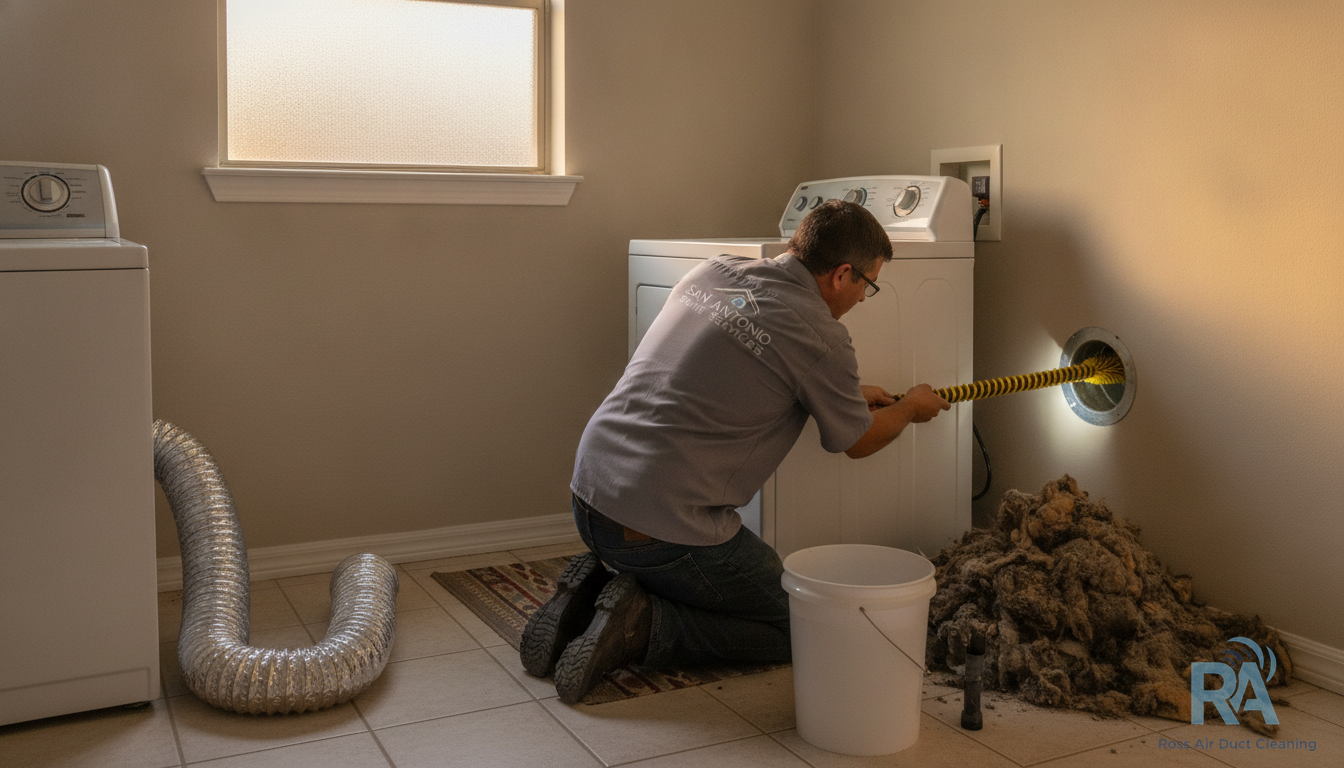
Our dryer vent cleaning service uses flexible rotary brush kits engineered specifically for dryer exhaust systems — not the same equipment used for HVAC ducts. These spinning brush heads travel the full length of your vent run, dislodging compacted lint and pushing it toward the exterior termination cap where our high-powered vacuum captures it.
After mechanical cleaning, we use an airflow meter at the exterior cap to measure actual cubic feet per minute of exhaust — this gives you a measurable, objective confirmation that the vent is fully clear, not just our word for it. We also photograph the exterior cap before and after to document the improvement.
During every dryer vent cleaning, we also inspect for:
- Crushed or kinked sections behind the dryer or inside wall cavities
- Prohibited flexible foil accordion duct that traps lint and violates most building codes
- Improper vent length or excessive 90-degree elbows that reduce exhaust capacity
- Bird or pest nesting at the exterior termination cap
- Roof-penetrating vent terminations that may require extended rod access
If we find improper materials or routing that can't be corrected by cleaning alone, we provide a written estimate for vent rerouting or replacement before any additional work begins.
How Often Should You Clean Your Dryer Vent?
The standard recommendation is at least once per year for average households. But San Antonio families who run their dryer frequently — large households, families with young children, households that wash bedding and towels regularly — should consider cleaning every six months. If your dryer is in a second-floor laundry room or has a vent that exhausts through the roof rather than a side wall, annual cleaning is especially important because these configurations accumulate lint faster.
You don't have to wait for the annual reminder either. Schedule a cleaning right away if you notice any of these warning signs:
- Clothes are still damp or warm after a full drying cycle
- The top or sides of the dryer feel unusually hot to the touch
- A burning smell during operation — even a faint one
- The laundry room feels hotter than the rest of the house when the dryer runs
- The exterior vent flap doesn't flutter or swing open when the dryer is running
- More than a year has passed since your last professional cleaning
Pair Dryer Vent Cleaning with Air Duct Service for Complete Home Air Quality
Many Ross Air Duct Cleaning customers combine their dryer vent cleaning with a full air duct cleaning on the same visit — it's efficient, and the combination addresses both the fire-safety side of your home's air system and the indoor air quality side at once. For homes dealing with musty odors or high humidity, adding our air duct sanitizing treatment after cleaning provides an extra layer of microbial protection.
Serving Dryer Vent Customers Across San Antonio and Bexar County
Ross Air Duct Cleaning provides dryer vent cleaning throughout Bexar County, including Castle Hills, Balcones Heights, and all San Antonio neighborhoods. We're available Monday through Sunday from 8:00 AM to 6:00 PM. Call +1 (726) 204-0555 or visit our dryer vent cleaning service area page to schedule your appointment today.
Confirm Availability
Call +17262040555 or fill out our online form for a free, no-obligation quote.
Request Free Quote